Showing posts with label animals. Show all posts

Friday, June 21, 2013

It's Hard to Let Our Children Go

Mrs. Haney's first grade class also had butterflies they had raised that were ready to release.  Actually the butterflies were more than ready.  The rainy weather had kept us and them inside.  Now it was time.

Click on any picture to make it larger.
Before we go out, Ms. Flaherty, our naturalist volunteer, asks the kids if they wonder anything about what will happen to the butterflies. The answers come flying in.

"I wonder where their homes will be."

"I wonder if they have sticky feet so they can stay on plants the way they stick on the top of their cage."

"I wonder if they are going to a better place than this classroom."

"Well, they are going to the place they are meant to be--outside," says Ms. Flaherty.


"
"Let's line up," says Ms. Haney.  

And, off we go.


Once we're in the outdoor classroom, Ms. Flaherty unzips the butterflies' home.  Suddenly one flies out and...

  
right onto Ms. Goodman's (our author-in-resident's) hand.  While this Painted Lady is getting ready for its next move, the kids say their goodbyes in the form of wishes.

"I hope you live a happy life."

"I hope God makes you food."

"Thank you, butterfly," Ms. Haney adds, "for allowing us to help you grow. It was a privilege to have you in our classroom."

Then, it flies out into the world!

Finally the only ones left in the cage are the two born with injured wings.  We decide to put them down gently on a flowering bush nearby.

"The injured ones are going to live a harder life," says Ms. Flaherty, "but we'll give them the best change we can."

"I like to think of them as survivors," said Ms. Haney.


Then all the first graders walked to the bush and watch their last two butterflies settle on a place, hopefully to live and thrive.

Goodbye, butterflies.

Friday, June 14, 2013

Who Wins the Race? Our Third Grade Class.

Click on any photograph to make it larger.
As we mentioned last post, Ms. Bishop's third grade class has been studying a book called Stone Fox by John Reynolds Gardiner. The kids have used this adventurous, rich tale to learn how to do many different analytic and writing skills.  They are also working on many of the new Common Core standards, as you can see.

Here are some of the interesting ways they are accomplishing these tasks.  Who says learning can't be fun?


In fact, here is a close-up example of one of the articles.  Nice job, Dominick!


The kids learned so much.  We learned so much too.  The only thing we don't know is how their poster got wet!

Friday, May 31, 2013

Goodbye, Butterfly


It often takes a while for any important occasion to take place.  This was true for the release of the butterflies flying from Ms. Hicks' first grade classroom into their new outside home.

While they were waiting, the kids reflected upon how they felt about saying goodbye.

"I'm happy," said Adam, "because the butterflies are going to find a whole new world out there."

"I'm happy and sad," said his friend.  "Sad because I wanted them to stay with us, but happy because this means they can go make other butterfly friends."

Finally it was time.


Songs were sung.

"Caterpillar, caterpillar, what do you say?
Wiggle, wiggle, wiggle all of the day!"

Dances were danced and then...

Good wishes and butterfly-decorated noisemakers sent the butterflies on their way.

In a moment, they were gone. 

Tuesday, May 28, 2013

We Read, We See, We Learn

Click on any picture to make it larger.


Ms. Hick's first grade class has been studying the life cycle of the butterfly.  


Just is case this is new to you, it starts with a butterfly laying eggs, which eventually hatch into caterpillars.  The caterpillars eat and grow.  When it's time for them to transform, they they spin a chrysalis around themselves to stay protected.  Finally the new butterfly breaks out into the world of sun, flowers, food, and more butterflies.  

The kids learned about this marvelous transformation in many ways.  They read about it, of course.  Ms. Hicks explained the facts. They also experienced the best kind of learning.  They watched the process with their own eyes!


They had a butterfly garden.


They could watch the caterpillars eat and grow.


They could see the caterpillars spin their protective sacs.  They also got to see them hatch!

What's next?


Friday, April 12, 2013

Writing a First Book

Click on any picture to make it larger.

First graders have questions.  They also are learning ways to get answers.  Each student in Ms. Hicks' class picked an animal they were interested in.  They read about it, decided what was important to report and wrote it up.
  

 They made covers for their work.

 
Then they presented their findings, complete with illustration.

Pick a topic, research it, organize the information, write a draft or two to make it better.  That's the same thing every writer should do--from a first grader up to a National Book Award winner.


Good work, kids.  Remember, a lot of professional authors don't even do their own illustrations!  

Wednesday, April 10, 2013

Who's YOUR Favorite Bunny?

Ms. Smith's kindergarten class has gone bunny crazy.  (There are worse things!)  They have been reading many stories about...that's right...bunnies. With all these rabbits hopping around in their heads, the class decided to put it to a vote.  Each child chose his or her favorite bunny. 


Click on  any picture to make it larger.
Here is a sample ballot.  Below, you will find some of the kids' choices and their explanations for them.


Many bunnies, many kids, many choices.  We guess that there's a rabbit for everyone.

Thursday, April 4, 2013

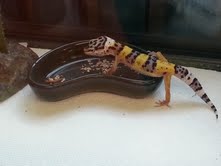
Meet Leo

Everyone, this is Leo.  Leo, this is the world beyond your home.

Oops, Leo is hiding.  He often does that, especially when people are around.

Click on the picture to make it larger.


Nevertheless, the kids in Ms. Murphy's second grade class have had many opportunities to see Leo, up close and personal.  There are times when Leo likes to stroll around his aquarium home.  There are even more times when he finds a good place to soak up some light.

"Leo is cold-blooded," explains Sacharis.  "That means he needs light and a heating pad to warm up."

Leo has a lot of kids who care about him.  They are also curious about what life is like for a leopard gecko.  It's nice to be able to learn about Leo in different ways.  


They can watch Leo carefully as scientists do and learn by observing his behavior.   They also have a book about geckos they can read to try and understand more about what they see.  They have seen Leo molt, for example.  The book says that leopard geckos shed their skins about once a month.  

"When it happens, it looks like the stuff on an onion," says Aliciana.  

It turns out that Leo eats that skin too.  "That's disgusting," said David, "but that's just what geckos do."

 
The kids have also seen Leo chow down--plenty of times.  He likes meal worms and has actually eaten up to fourteen in one day.  Some kids have watched and counted.


The guidebook is also supposed to explain how you can tell whether a gecko is male or female.  It's not as easy to figure out with lizards as other animals.  Even though the kids have read this section, they still haven't quite determined whether Leo is a he or a she.  Most kids think Leo is a he because of his name or because they want him to be.  


Others aren't as sure.  Even without a definite answer, there is a bright side to this problem.  Many kids have learned how to use a table of contents!

Tuesday, April 2, 2013

An Overdue Introduction to Leo

Remember, you can click on any picture to make it larger.

This is a lovely letter from Brianna to Gecko, a welcome letter for when Gecko arrived in Ms. Murphy's second grade classroom.  It is heartfelt, but not entirely accurate. Gecko is the second graders' class pet.  They chose him (her?) in a true democratic process.  So it's fair to say that she (he?) is everybody's pet--at least, until summer vacation.  

Perhaps you remember way back in November, Ms. Murphy's class decided upon their class pet using the democratic process (reported on in four consecutive posts) .  They thought about the possible candidates--their advantages and disadvantages. What better way to learn to be a good citizen, especially at the same time another election was going on.  First they formed parties, so they could examine all the pros and cons of three animal choices.  (The idea of a cat never made the final cut.)

Their next move was to form three parties and begin planning their campaigns.  There's nothing better to sell your case than a good-looking poster.  Go Fish!  Go Hermit Crab!     Go Gecko!

Part of any campaign's goal is to convince voters that your choice is the best one. After presenting their speeches, The Fish Party, The Hermit Crab Party and The Gecko Party all understood that one of that week's vocabulary words, persuade, means to try to convince others of your point of view.

Election Day--secret ballot, NO DIRTY TRICKS.  The tally was very carefully counted.  At first it was close, but do you want to know who won? 

We've gone on long enough today.  Next post, we will introduce you to LEO.

Thursday, March 7, 2013

We Can, Common Core

Today, it's time to report on Ms. Leverett-King's first grade class and its adventures with Common Core.  For those who don't know, Common Core State Standards are the new guidelines for what students should learn and when.  

Ms. Leverett-King's class has tackled Standard RI.1.9: Identify basic similarities in and differences between two texts on the same topic (e.g., in illustrations, descriptions, or procedures).  This standard is for nonfiction or informational texts and the subject they chose was a first grade favorite--dinosaurs.

Remember, you can click on any picture to enlarge it.
After reading about two dinos, the Tyrannosaurus Rex and the Triceratops, the class started brainstorming about how the two animals were different and what they shared in common.

Ms. Leverett-King got them ready to write up their findings by writing helpful compare-and-contrast words on the board, such as, "but," and "and" along with phrases like, "Although they are different, in many ways they are the same.  

What ways?  Let's see some examples:


Eliana preferred to stress the two dinosaurs' differences on one page and...


their similarities on another.


Jaylen took the same two-page approach, but organized it differently.


While Jasmine managed to get a little bit of both on one page.  

There are many ways to compare and contrast!