Showing posts with label adaptations. Show all posts

Tuesday, May 28, 2013

We Read, We See, We Learn

Click on any picture to make it larger.


Ms. Hick's first grade class has been studying the life cycle of the butterfly.  


Just is case this is new to you, it starts with a butterfly laying eggs, which eventually hatch into caterpillars.  The caterpillars eat and grow.  When it's time for them to transform, they they spin a chrysalis around themselves to stay protected.  Finally the new butterfly breaks out into the world of sun, flowers, food, and more butterflies.  

The kids learned about this marvelous transformation in many ways.  They read about it, of course.  Ms. Hicks explained the facts. They also experienced the best kind of learning.  They watched the process with their own eyes!


They had a butterfly garden.


They could watch the caterpillars eat and grow.


They could see the caterpillars spin their protective sacs.  They also got to see them hatch!

What's next?


Thursday, April 4, 2013

Meet Leo

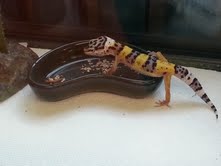
Everyone, this is Leo.  Leo, this is the world beyond your home.

Oops, Leo is hiding.  He often does that, especially when people are around.

Click on the picture to make it larger.


Nevertheless, the kids in Ms. Murphy's second grade class have had many opportunities to see Leo, up close and personal.  There are times when Leo likes to stroll around his aquarium home.  There are even more times when he finds a good place to soak up some light.

"Leo is cold-blooded," explains Sacharis.  "That means he needs light and a heating pad to warm up."

Leo has a lot of kids who care about him.  They are also curious about what life is like for a leopard gecko.  It's nice to be able to learn about Leo in different ways.  


They can watch Leo carefully as scientists do and learn by observing his behavior.   They also have a book about geckos they can read to try and understand more about what they see.  They have seen Leo molt, for example.  The book says that leopard geckos shed their skins about once a month.  

"When it happens, it looks like the stuff on an onion," says Aliciana.  

It turns out that Leo eats that skin too.  "That's disgusting," said David, "but that's just what geckos do."

 
The kids have also seen Leo chow down--plenty of times.  He likes meal worms and has actually eaten up to fourteen in one day.  Some kids have watched and counted.


The guidebook is also supposed to explain how you can tell whether a gecko is male or female.  It's not as easy to figure out with lizards as other animals.  Even though the kids have read this section, they still haven't quite determined whether Leo is a he or a she.  Most kids think Leo is a he because of his name or because they want him to be.  


Others aren't as sure.  Even without a definite answer, there is a bright side to this problem.  Many kids have learned how to use a table of contents!

Thursday, March 7, 2013

We Can, Common Core

Today, it's time to report on Ms. Leverett-King's first grade class and its adventures with Common Core.  For those who don't know, Common Core State Standards are the new guidelines for what students should learn and when.  

Ms. Leverett-King's class has tackled Standard RI.1.9: Identify basic similarities in and differences between two texts on the same topic (e.g., in illustrations, descriptions, or procedures).  This standard is for nonfiction or informational texts and the subject they chose was a first grade favorite--dinosaurs.

Remember, you can click on any picture to enlarge it.
After reading about two dinos, the Tyrannosaurus Rex and the Triceratops, the class started brainstorming about how the two animals were different and what they shared in common.

Ms. Leverett-King got them ready to write up their findings by writing helpful compare-and-contrast words on the board, such as, "but," and "and" along with phrases like, "Although they are different, in many ways they are the same.  

What ways?  Let's see some examples:


Eliana preferred to stress the two dinosaurs' differences on one page and...


their similarities on another.


Jaylen took the same two-page approach, but organized it differently.


While Jasmine managed to get a little bit of both on one page.  

There are many ways to compare and contrast!

Friday, March 1, 2013

How Do You Learn?

The answer is: Be curious; ask questions. That is how the kindergarten started their science unit on animals.    

Remember, you can click on any picture to make it larger.

So what do inquiring young minds want to learn about animals and their behavior?  Here are just a few examples:


Tuesday, January 15, 2013

An Author's Visit

Some of our younger kids see Ms. Goodman in the halls or in their classrooms and know she help writes the PerkinsBlog.  They forget, however, that she has another part of her working life.  She writes books; she is an author.  Recently she visited Ms. Haney's first grade class to talk about her "other job."


She explained that all books start with ideas.  Sometimes a publisher, or book company, comes to her with an idea and asks her to write about it.  That's how she came to write about monster trucks, for example.


"These books are fun and I learn a lot," she said, but her favorites are often the books when she came up with the idea herself.  The kids liked the idea behind All in Just One Cookie.  It is actually two stories in one.  The first is a grandmother making chocolate chip cookies for her grandchildren.  Then each time Grandma puts a new ingredient in the bowl, we find out where that butter or chocolate came from.  Did you know that baking soda comes from a giant lake in Wyoming that dried up 50 million years ago?


Ms. Goodman read the kids another book based on one of her own ideas, Nature Did It First.  She showed them a picture of a human using an object or device, say, a woman carrying her baby in a Snugli.  Then the kids could guess what animal carries her baby this way--a kangaroo!  

Here Ms. Goodman showed a picture of a boy on skates protected by a helmet, shin guards, and elbow pads.  The caption said, "Armor."  What animal also protects itself with a hard outer core?


The kids had a lot of answers for that one.  Turtles, snails, crabs, beetles. Those were all right answers.  It turned out Ms. Goodman had picked another one for her book, though.  The armadillo!


Finally it was time for the kids to start working on ideas of their own.  Ms. Goodman asked them to come up with ideas for another book: People Did It Second. She showed them pictures of animals doing something and asked them to come up with human equivalents.  For example, in this picture, a mother gorilla has built a nest of branches and leaves for her and her baby to sleep on.  What do people have that is similar?


The kids came up with several ideas.  They also came up with some great ideas for what humans have that works like a pelican's pouch and the emperor penguin's practice of having a few adults taking care of lots of kid penguins.  As you can see, our first graders had many suggestions for that one.  

Good ideas, kids! 

Thursday, December 13, 2012

The Worm Farm: Learning by Looking

"Today we are doing an interesting experiment," explained Ms. Flaherty, our head worm farmer.  We are going to see how much we can learn just by observing.  Does anybody know what that means?"

"Looking," offered one of the kindergarteners in Ms. Breneus's class, and she was exactly right.


Before the kids took an up-close-and-personal look at the red wiggler worms in their worm farm, Ms. Flaherty read them a book to explain more about what they would be looking at.  The kids learned that worms have no eyes, no ears, no legs, no arms, no lungs, but that they are still very well suited to live their lives digging through soil.  Or, in our classroom, digging through coffee grounds and wet newspaper.  


Instead of legs, they have bristles on each segment of their bodies that help them move. Ms. Flaherty moved a Slinky to show them how having so many segments lets the worm turn and maneuver.


The kids already knew that worms need to stay moist.  So they each sprayed a piece of paper towel to get ready for their temporary guest. 


Then they each got a worm and a piece of apple.  Since the red wigglers love apple peels, the kids wanted to see if they would wiggle their way in the apple's direction.


Then it was time for each student to do exactly what scientists do. They learned by looking. The observations came fast and furious.

"Mine is a real wiggler."

"Mine is hungry.  It's moving toward the apple."

"The bristles are so tiny!"

"Mine is staying in the coffee dirt.  Maybe it's scared."

"It's so soft," says one scientist, carefully touching his worm."


"Mine loves its worm tunnel," said another, "but he didn't stop to eat some.  Why?"

That's science for you: It raises as many questions as it answers.

Friday, October 12, 2012

So That's What Our Country Looks Like!


 You may remember that last month, Ms. Bishop's third grade class started their adventure learning American history. At the end of that post, we told readers to stay tuned for the maps that the kids would be making next.   


So off they went to their geography unit.  The kids learned the continents and oceans, the compass rose and directions, and where they live in the world. Then they looked more carefully at the United States, after all, how can you learn its history if you don't know what the country looks like. 


Then to make the information feel more concrete, the kids worked in groups of three to create three-dimensional maps of the United States. Each day they added more information. They started by learning what borders the United States. Then they learned about the largest river, the Mississippi River, and two of the largest mountain ranges (the Rocky Mountains and the Appalachian Mountains). The kids also put Washington, D.C. and Massachusetts on the map so they could visualize where we live within the United States. 


As they move forward in our history studies, these maps will serve as a reference tool. For example, when the kids learn about the Pilgrims leaving Europe and sailing to the United States, they will understand that the Pilgrims sailed across the Atlantic Ocean and reached the east coast. 

Before that, however, they will be using their maps in the Native American unit they have just started.  They are looking at the land features and climate in different regions of the United States and learning about how these features affected the way of life for Native American tribes within the region.

This is getting interesting, isn't it?  Start tuned...

Thursday, December 8, 2011

Fishing for More Knowledge


As you might remember, Ms. Harden's fourth grade class went to the New England Aquarium. You can read about their partnership with the aquarium and their visit here.


While they were there, the kids had an assignment to study the animals in the Boulder Reef Exhibit. They were supposed to think about the kind of living place (habitat) the animals had. Then they each had to pick one of the creatures and write about how it was suited to live its life in that environment.

Time was short, however, and there were rays to pet and penguins to watch. Luckily Jessica, the educator from aquarium, had a date to come to the Perkins to continue discussing habitat and adaptations.

There, the kids had a chance to talk about the observations they had written down. Here are some examples of their work:


Jessica had a chance to talk about many of the adaptations the kids mentioned. She also added a few more of her own.

To the blogmaster, author-in residence Susan E. Goodman, one of the best parts of the assignment was having the kids write down questions THEY had at the bottom of the page. In the case of--

Renny: How fast does this animal (seastar) move?

Isabel: Why do fish get scared when you tap the glass?

Shakira: Why do the (seastar's) suction cups look macaroni?

Curiosity is great. How else do you learn? Questions are great. How else do you learn? You can be sure that most discoveries made by scientists began with questions they wanted to answer!

The kids will be answering these questions and more when the next part of their scientific adventure begins--WRITING THEIR OWN CLASS BOOK ABOUT AQUATIC ANIMALS AND THEIR ADAPTATIONS.

Wednesday, November 30, 2011

Fishing for Knowledge at the Aquarium

The Perkins School now has a partnership with the New England Aquarium. And, Ms. Harden's fourth grade class is learning about animal adaptations--aquatic animals, that is. Jessica, an Aquarium educator, has already visited the Perkins, bringing some animals into the classroom.

Last week, it was the fourth grade's turn to visit her--along with everything else at the Aquarium from 80-year-old, 500-pound Myrtle the Turtle to the most beautiful seastars.

Before the kids went in, they got some ground rules: Don't drop anything in the water; after all, gum can get stuck on a seal's coat. And, don't tap the glass. It scares the fish!

Then Mrs. Harden added, "Make sure you look a as well. In fact, each of you will have to come back and report on two things that you never knew before."


Just two!?! The kids set off in small groups with teachers and chaperones and learned something new just about every minute! Ms. Harden's group went to see the seals first, reading signs about each one and then picking them out in the pool. Cordova makes yelling sounds.


Isaac can't see so well. Nevertheless, he manages to see a trainer's signal and do the trick that gets him a fish!


Another group stared for a long time at the leafy seadragon exhibit. It takes a while to realize that the seaweed is actually a seahorse.

"What is that animal's adaptation?" the chaperone asks. "Camouflage!" the kids answer.

The seadragon was something new, but not the idea of camouflage. Since the kids had been studying adaptations, they know that all living things have special things about them that help them fit into their worlds.


They learned even more about the subject when they visited the Boulder Reef Exhibit. There, Jessica asked them to act like scientists as they looked at the tank of creatures. Then they filled out a paper with their thoughts about how the bodies and actions of these animals helped them live on the reef.


Some of our kids learned that cownose rays and little bonnethead sharks liked to be petted. That's probably not an adaptation, but it is a fun activity for fish and kids alike.

"I was surprised," said one girl, describing her reaction to touching the ray. "It feels so soft--and a little greasy."


Azaryah wasn't as interested in touching the fish. She had a favorite spot, scrunching down to watch them eye-to-eye. "It's more fun," she explained. I can see them better and actually watch what they are up to down there."

Good for her, that's just what scientists do.